
Trapped Fish
On the popularity, cost, and joy of tinned sardines

The popularity of trapped fish1 hit a crescendo in 2025, with Gen-Xer magazine editors tagging onto the back of the Sardine Girl Summer, instagramming pretty boxes of trapped goodness and buying their daughters ring pull accessories (a trend I jokingly preconceived in 2021, a little too early to be right2). We have come full circle, once again aligned on the facts of life: everyone has remembered that tinned fish is great.

The cooks and writers who built the foundations for the zoomers’ well placed mania started to build pace in the blogosphere of 2010s3, with international popularity picking up considerable pace towards 2020, as documented by Anna Hezel in The Art of Sardine Collecting. Three years later, Anna published a cookery book dedicated to their use, Tin to Table.
Posting photos of you and your girlies sharing a tin at a chic wine bar is a great start, but there is probably some cultural bedding in to do, lest we forget the joys of oily little fish again. Strike whilst the iron is hot, and we can cement the place of tinned fish in the everyday food culture of the British youth. The last great sardine wave was in the 1980s, as documented by Patricia Wells (writing of Parisian gormandise), and John Thorne, recounting young American entrepreneurs riding the trend to sell artisanal, mesquite-grilled fish hand packed with herbes de provence and cold pressed olive oil. Sound familiar?
K-shaped Kitchen
What makes one tin of fish better than another? Why do some canneries’ tins command the price of a small chicken?
To risk snobbery, an excellent case study for this point would be Sea Sisters. Their products are absolutely delicious. Charlotte Dawe and Angus Cowen (an ex-Sous from Trullo & Rochelle Canteen) started Sea Sisters during lockdown. When everyone else was baking banana bread and having illegal garden parties, they had the good sense to think about British fish. Britain has an abundance of excellent fish, and had zero canneries making premium ‘conservas’ style products; the only cannery was up in Scotland, doing industrial scale canning for supermarkets.
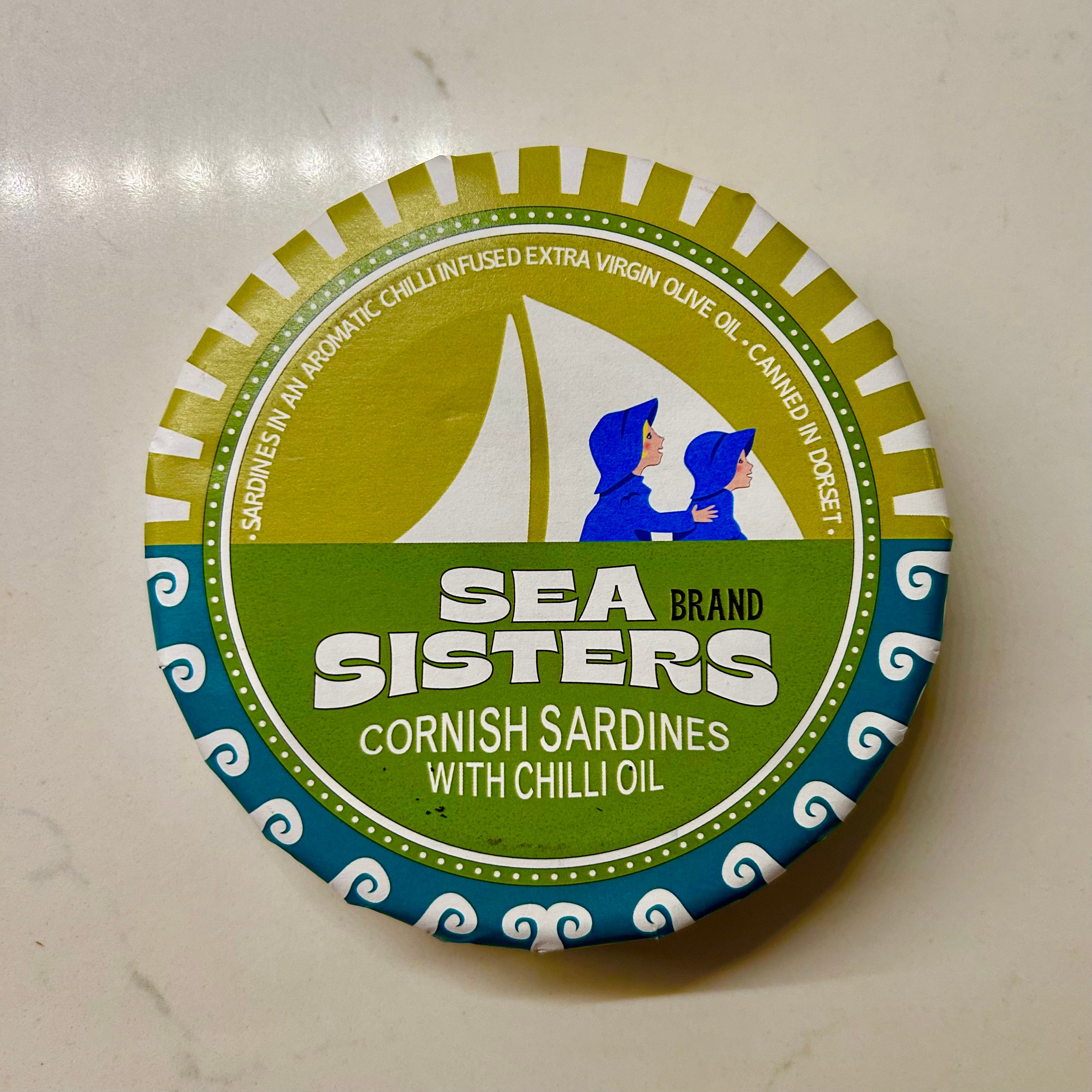
Without getting into the weeds of food-chain economics, Sea Sisters tins command an 8-10x premium over supermarket tins4. Aside from the branding and hype, I’m quite sure their premium is in part because they internalise costs that industrial producers have ignored: traceable supply chains, hand-processing labor, sustainable catch methods, and domestic infrastructure investment. Sea Sisters use excellent quality and sustainably harvested British fish & seafood; which continues to have a surprisingly — and sadly — low domestic demand. They use carefully tested processing techniques, without exotic preservatives or weird chemicals, and pack their sardines with good olive oil5, which is regeneratively farmed and pressed in Zakros, Crete6. As well as their excellent sardines, they also offer hake, whelks, cuttlefish, mussels, and trout. This all adds up to a significantly more expensive product. To be clear, I’m not suggesting this as a solution, but rather exploring some of the reasons behind the huge price difference.
In recent memory, Moroccan fisheries have accounted for a huge portion of the sardine market, and are now facing an indefinite ban on frozen sardine exports following years of overfishing and now warming waters (costs never accounted for on the supermarket shelf price). Whilst cheap tins have clearly filled a real need at impressive scale, it would be dishonest to ignore the realities of declining global stocks, and the impossibility of British sardines being made available anywhere near the global market price. Not all of us are fortunate enough to be able to buy the fancy tins, and declining supply has already led to a 60% surge in sardine market prices. I sincerely hope market and regulatory forces can find a solution to maintain the flow of affordable fish, but in the meantime I’ll count myself lucky to be able to buy into the premium bracket.
Like any great ingredient, tinned sardines don’t need a lot doing to them to make a delicious meal. The following are a few ideas, if you want to do something other than eat them out the tin (entirely valid strategy).
Tinned Sardine Linguine with Pine Nuts, Chilli, Garlic, and Parsley - Tim Siadatan, Padella
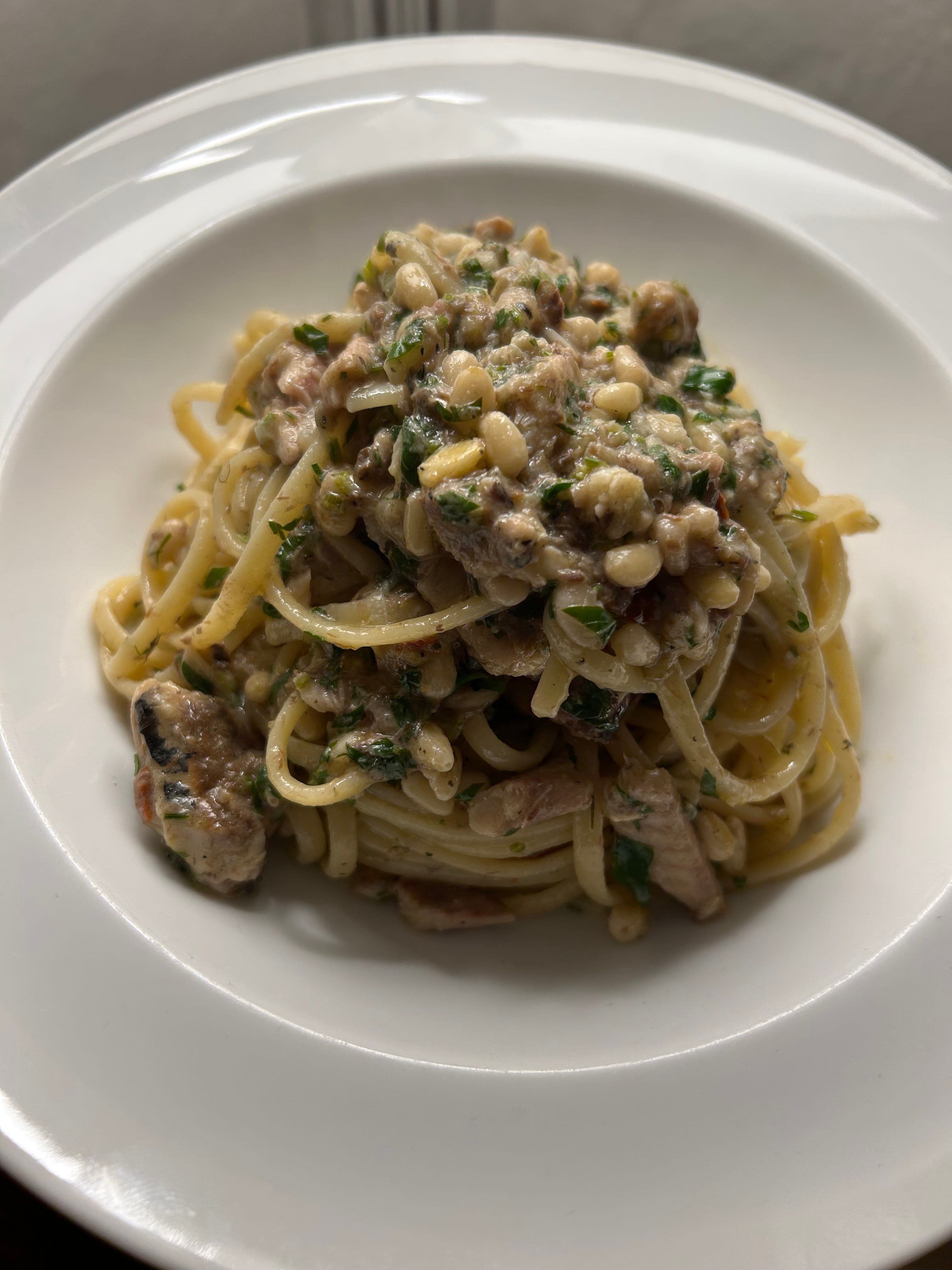
This recipe idea comes from Angus’ former boss, Tim Siadatan, published in his great new book, Padella (the name of his pasta restaurant), which is full of great recipe ideas reflecting the sort of creative freedom pasta allows for once you have some confidence. He has another tinned sardine pasta recipe, published in the Trullo book: tinned sardines, cabbage, garlic, and dried chilli.
It would probably be poor form to share the recipe in full, but in truth it takes very little guesswork on how to put it together from the ingredient list alone, if you have a sense of basic pasta techniques and very common recipes. It is essentially aglio, olio e peperoncino with sardines, pine nuts and parsley7.
There are endless variations on the theme, however the basic principle holds that tinned sardines can be just as delicious — if not more so — than their fresh siblings, and are elevated by the simplicity of few other ingredients.
Tinned Sardine & Onion Salad Sandwich
This is a favourite sandwich of mine. I have a real penchant for raw onions8, which provide the ‘nyagh!’ factor, as Fergus Henderson said of capers.
1 tin of trapped sardines per sandwich
White bread
Butter
One sweet onion
Flat parsley
Lettuce (optional)
Lemon
Salt & white pepper
Get two slices of white bread, preferably something like a country style boule, and preferably not sourdough, and spread liberally with butter. Drain your tin of sardines, keeping the oil, and roughly splitting them down the spine, lay them out on one side of the bread. Sprinkle over some crunchy sea salt, and a generous few turns of white pepper. For the onion salad, finely slice about a quarter of a sweet variety of onion (I love Cevennes when I can get them), and put them into a bowl. Pick some parsley leaves off their stalks (about a palm-full), and add them to the bowl. I also like to chop up a little bit of lettuce, for sweetness and texture, and add that to the bowl. Dress with what St John call ‘lemon oil’, which isn’t really what it sounds like: just sprinkle over a little olive oil (from the tinned fish if it is decent quality), and a squeeze of lemon juice at roughly 2:1 of oil to lemon juice. Lightly season the leaves with salt, then mix together and place on top of the sardines, then top with the other slice of bread. Slice in half.
Other Ideas of Other Cooks
Pasta con le sarde is a very famous dish from Sicily which is often made with fresh sardines, but would work well with tinned also. Fragrant with onions, fennel, raisins, pine nuts, anchovies, sardines, and saffron, and sometimes finished with a pangrattato. It is a beautiful dish.
Pierre Koffman says his mother used to make a sardine croque monsieur. I haven’t tried this yet, but I am curious.
Jeremy Lee enjoys his tinned sardines either mashed up with parsley, put onto toast, and grilled, or in a salad nicoise in place of the usual tuna.
Stephen Harris of The Sportsman has a recipe in The Sportsman at Home (another lovely book I would highly recommend) for a sardine ragu: cook a soffrito, adding a can of tomatoes and cooking down until thick, and then adding in tinned sardines with their oil, finishing with some choice herbs and acidity.
Something apparently popular in British prisons are tinned fish curry, per Natty Can Cook’s reportage.
A special thank you to Bob Mortimer

https://mouth-full-of-sardines.blogspot.com
Not quite as expensive as Angry Norwegian brand, Fry’s favourite.
Made you look....drink.
There is now an olive producer in Lincolnshire, so at some point in the future they might even be able to use English olive oil.
E.g.:
This potentially divisive sandwich recipe is for my dear friend who shares my love of raw onions